DIY Backyard Weather Stations: Rain Gauges, Vanes & Barometers
Engineer working meteorological instruments to track wind speed, rainfall depth, and atmospheric air pressure.
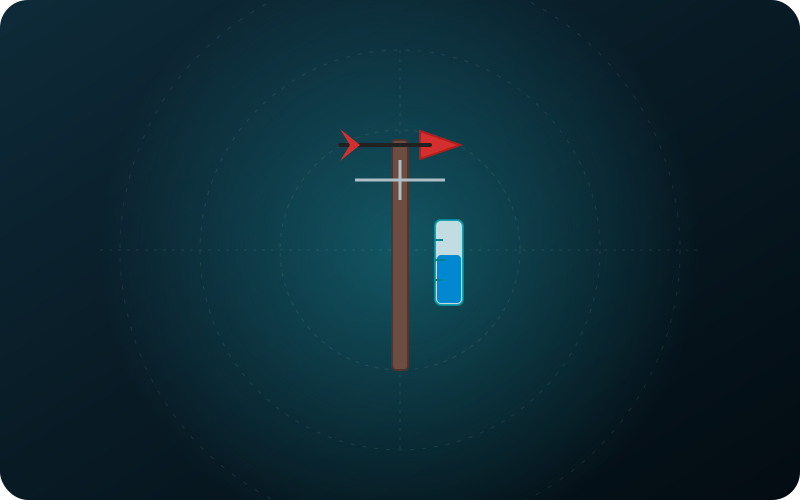
Atmospheric Physics, Precipitation & Isobars
Scientific Insight
Weather is driven by uneven solar heating of Earth, creating high and low pressure air masses. Falling barometric pressure signals approaching storm fronts and precipitation.
Ecological Value
Fosters acute awareness of local weather patterns, seasonal precipitation, and climate trends.
Developmental Skills & Physical Milestones
Calibration & Measurement Scale Marking
Marking precise millimeter or 1/8-inch tick marks along the side of a graduated cylinder.
Compass Directional Alignment
Orienting the wind vane base precisely with magnetic North to read true wind bearings.
Daily Systematic Data Recording
Recording temperature, pressure, rainfall, and cloud types at the exact same hour daily.
Gather materials from nature, your recycling bin, or household kitchen supplies before heading outdoors.
- 2-liter clear plastic soda bottle (for rain gauge)
- Waterproof permanent marker & metric/inch ruler
- Glass jar, rubber balloon, rubber band & drinking straw (for barometer)
- Wooden dowel, pencil with eraser, pushpin, plastic cup & cardboard arrow (for wind vane)
- Small stones/gravel (weight)
- Weather logbook clipboard
Step-by-Step Play Blueprint
Follow these 5 guided steps. Let your child take the lead in modifying and experimenting with the rules as play unfolds.
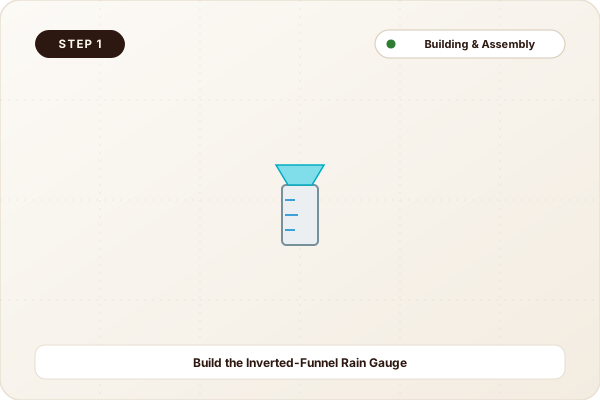
Build the Inverted-Funnel Rain Gauge
Cut the top third off a clear 2-liter soda bottle. Put 1 inch of pebbles in the base and invert the cut top like a funnel inside to prevent evaporation.
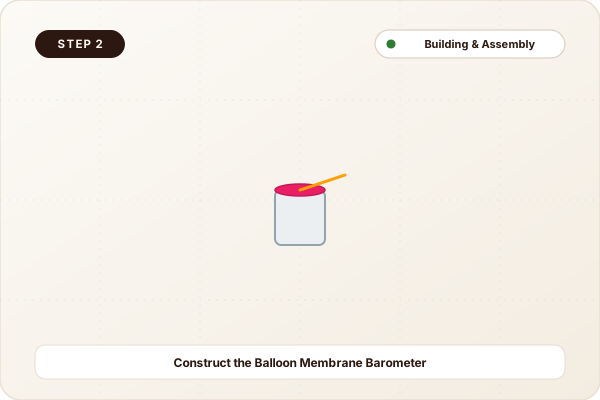
Construct the Balloon Membrane Barometer
Cut the neck off a rubber balloon and stretch the rubber sheet tightly over the mouth of a glass jar, sealing with a rubber band. Tape a horizontal drinking straw to the center.
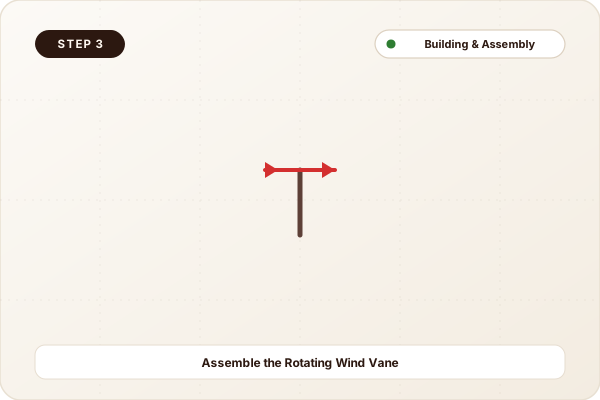
Assemble the Rotating Wind Vane
Cut a cardboard arrow (tip and tail fin). Push a pushpin through the center of the arrow into the eraser of an unsharpened pencil so it pivots freely in the breeze.
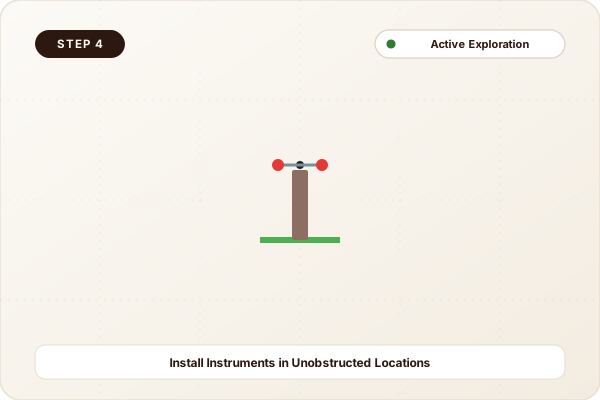
Install Instruments in Unobstructed Locations
Mount the rain gauge on a fence post away from roof overhangs. Place the barometer in a shaded outdoor porch cabinet, and set the wind vane in the open yard.
Maintain the Daily Meteorologist Logbook
Check instruments every day at 4:00 PM. Record rainfall in millimeters, wind direction (e.g., NW), barometer trend (Rising/Falling), and sky cloud classification!
All bottle cutting should be done by an adult. Ensure pushpins on wind vanes are capped securely.
Fostering Autonomy & Calculated Risk
This project makes abstract science concrete. Children begin predicting rain hours before it arrives by simply glancing at their handmade barometer needle!
More Outdoor & Garden Activities
View All 65
Shadow Stick & Stone Sundials: Solar Timekeeping Science

Aerodynamic Garden Pinwheels: Kinetic Wind Sculptures