Wind, Rain & Cloud Weather Activities: Cloud in a Jar & Wind Trackers
Form miniature water vapor clouds inside glass jars, build rain gauges, and track wind currents with bubble soap.

The Hydrological Cycle & Cloud Condensation Nuclei
Scientific Insight
Clouds form when warm, humid air rises, cools to its dew point, and condenses around microscopic aerosol particles (smoke, dust, pollen) known as cloud condensation nuclei.
Ecological Value
Understanding how rain replenishes freshwater aquifers, rivers, and agricultural soils.
Developmental Skills & Physical Milestones
Condensation Science Demonstration
Observing how warm humid air trapped beneath ice cubes produces fog when condensation nuclei are introduced.
Micro-Wind Current Mapping
Releasing soap bubbles to trace micro-turbulences around fences, tree canopies, and roofs.
Cloud Classification Recognition
Distinguishing puffy Cumulus (fair weather), flat Stratus (blanket rain), and wispy Cirrus (ice crystals).
Gather materials from nature, your recycling bin, or household kitchen supplies before heading outdoors.
- Glass mason jar with metal lid (for cloud in a jar)
- Warm water & ice cubes
- Aerosol hairspray or wooden match (condensation nuclei - adult use)
- Bubble solution and wand (for wind tracking)
- Cloud identification mirror or printable viewfinder card
Step-by-Step Play Blueprint
Follow these 5 guided steps. Let your child take the lead in modifying and experimenting with the rules as play unfolds.
Create a Real Cloud Inside a Glass Jar
Pour 1 inch of warm water into a glass jar. Swirl it around. Invert the metal lid on top and fill with ice cubes. Have an adult quickly spray a 1-second spritz of hairspray inside and replace the ice lid: instantly, a thick swirling white cloud fills the jar!
Track Invisible Wind Currents with Bubbles
Blow a stream of small soap bubbles into the yard on a breezy day. Do not pop them; watch how they rise on invisible solar updrafts, dip behind garden sheds, and trace turbulent wind paths.
Craft a Cardboard Cloud Identification Viewfinder
Cut a 4x4 inch square window out of the center of cardstock. Glue illustrations of 4 cloud types (Cirrus, Cumulus, Stratus, Cumulonimbus) around the border.
The Puddle Evaporation Time Trial
After a rain shower, trace the perimeter of a driveway puddle with sidewalk chalk. Check back every hour and trace the shrinking puddle rings: calculate how fast solar heat evaporates water back into the atmosphere!
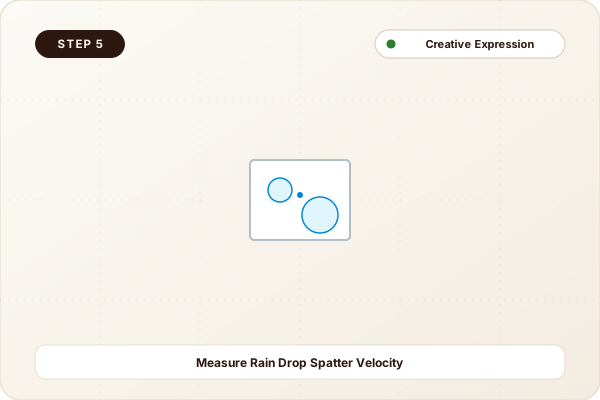
Measure Rain Drop Spatter Velocity
Dust a sheet of white cardstock with powdered cocoa powder or dry cornstarch. Hold outside in falling rain for 5 seconds: raindrops leave crater rings proportional to their mass and velocity!
Adults should supervise the cloud-in-a-jar experiment when using hot water or aerosol spray.
Fostering Autonomy & Calculated Risk
Weather is happening all around us every second. When children understand the physics behind clouds and puddles, rainy days become exciting science labs rather than gloomy disappointments.
More Outdoor & Garden Activities
View All 65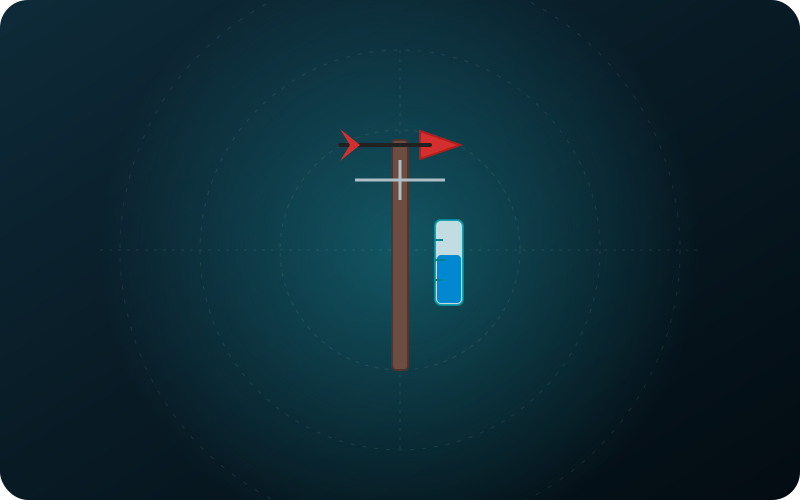
DIY Backyard Weather Stations: Rain Gauges, Vanes & Barometers

Shadow Stick & Stone Sundials: Solar Timekeeping Science