
DIY Cartesian Diver in a Sealed Bottle
Demonstrate Density, Buoyancy & Boyle’s Law with a Pen Cap
Household Scraps & Tools Needed
Assembly Instructions (5 Steps)
Follow each step carefully. Work together to clean waste, score precise cuts, align pivots, and test kinetic mechanics.
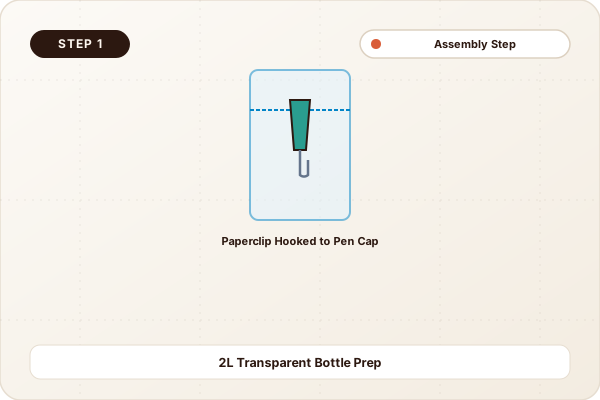
Construct the Pen-Cap Diver Body
Take a plastic pen cap with a closed top (or plug any top vent with a dab of waterproof clay/hot glue). Hook 2 or 3 metal paper clips into the bottom clip arm as ballast.
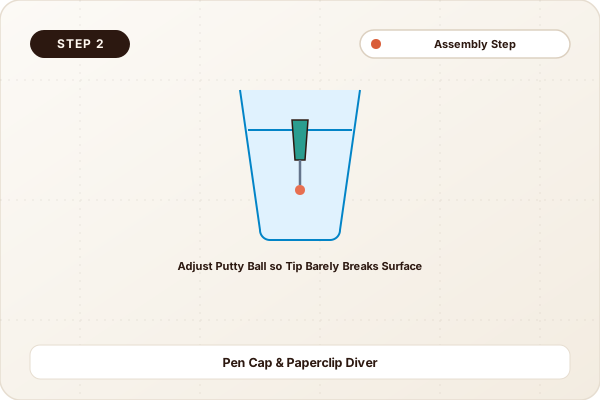
Calibrate Buoyancy in a Test Glass
Drop your diver into a tall glass of water. It should float upright with only the very tip of the cap peeking above the water line (nearly neutral buoyancy).
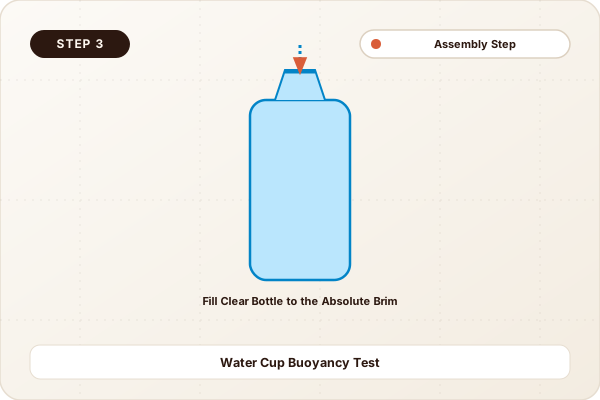
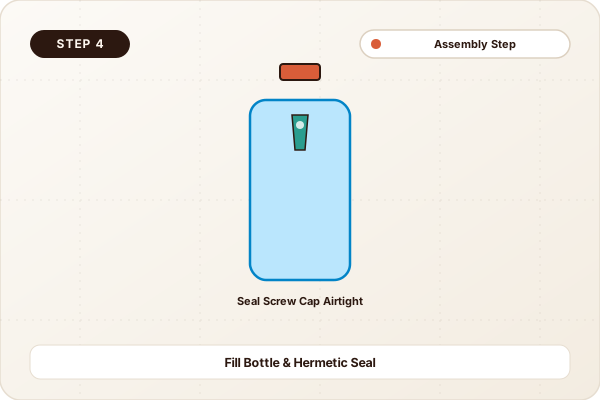
Fill Soda Bottle to the Absolute Brim
Fill a clean clear plastic bottle with tap water all the way to the top lip. Leaving no air gap at the neck ensures maximum pressure transfer from your squeeze.
Insert Diver & Cap Hermetically
Carefully slide your calibrated diver into the bottle. Screw the bottle cap on tightly to create an airtight, watertight seal.
Squeeze to Dive & Release to Rise
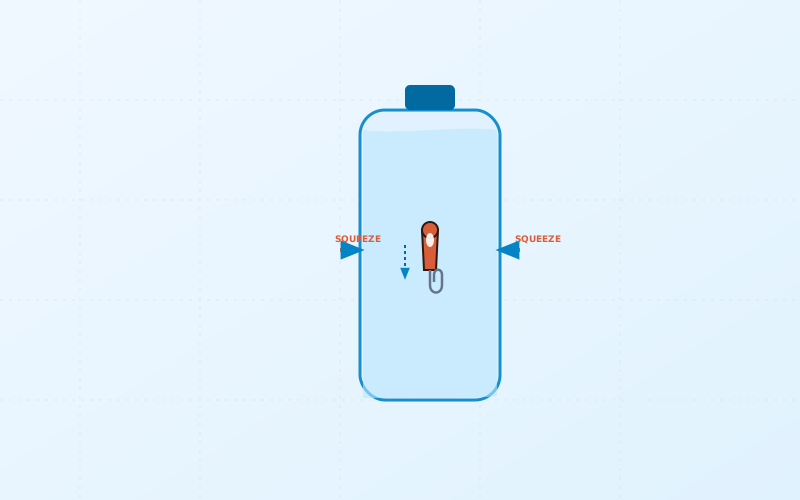
Squeeze the sides of the bottle firmly with both hands. Watch the air bubble shrink inside the cap as the diver plunges to the floor. Release your grip and watch it surface.
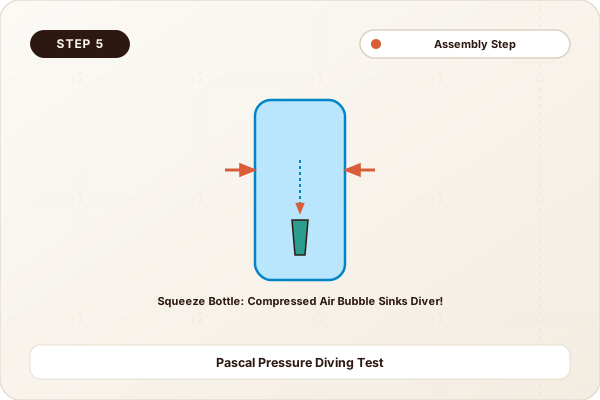
Archimedes' Principle & Boyle's Gas Law
Squeezing the bottle increases hydrostatic water pressure, which compresses the tiny air bubble trapped inside the pen cap. With reduced air volume, the diver’s overall density exceeds water, causing it to sink.
Releasing the bottle lets the air bubble expand back to its original volume, restoring positive buoyancy so the diver floats to the top.
Skills Your Child Develops with This Project
Fluid Hydrostatics & Density
Understanding why objects float or sink based on relative density to surrounding liquid.
Fine Calibration & Neutral Buoyancy
Adjusting paper clip ballast so the diver floats barely at the water surface.
Hand Grip Strength & Pressure Modulation
Graduating grip squeeze to make the diver hover mid-water at a precise depth.
Fun Family Experiments & Mini-Games
The Submarine Depth-Lock Hover
Practice modulating hand pressure to hold the diver exactly at the midpoint line of the bottle for 10 consecutive seconds.
The Deep-Sea Treasure Retrieval
Drop a tiny plastic ring to the bottle floor and try using the diver’s paper clip hook to snag and retrieve the ring.
Parent Note:
This classic 17th-century experiment named after René Descartes feels like genuine magic to kids while teaching profound principles of fluid density and pressure.
More Upcycled Projects in Bottles, Caps & Straws & Beyond
Recycled Bottle Balloon-Powered Jet Racer
Build a jet-propelled racer car from an empty plastic water bottle, straw axles, and bottle-cap wheels powered by escaping balloon air.
DIY Musical Straw Pan Flute & Pitch Harmonizer
Construct a 8-note diatonic musical pan flute using upcycled drinking straws trimmed to calculated lengths to play real melodies and understand acoustic frequency.
Two-Way Upcycled Bottle Pneumatic Air & Water Pump
Construct a functioning reciprocating air pump using recycled plastic bottles, marbles or plastic flap check-valves, and flexible tubing to inflate balloons.