Frisbee Flying Disc Games: Aerodynamics & Backyard Disc Golf
Master backhand throws, aerodynamic gyroscopic lift, and design a multi-hole backyard frisbee golf course.
Aerodynamic Lift (Bernoulli’s Principle) & Gyroscopic Stability
Scientific Insight
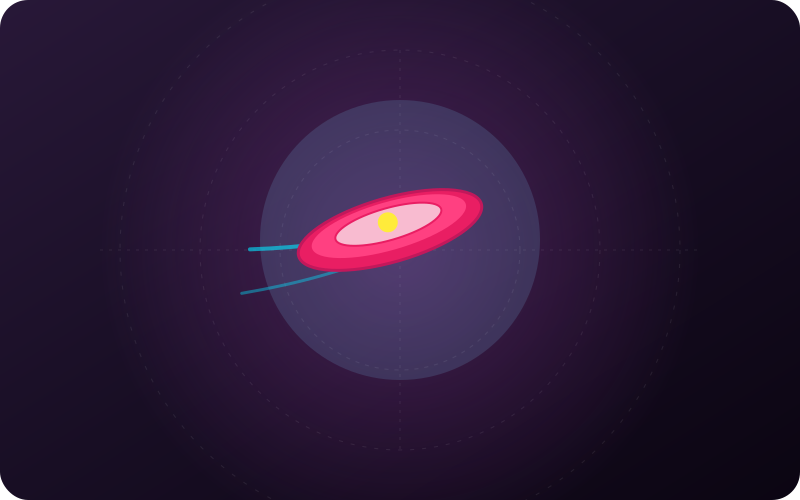
The curved top surface of a flying disc forces air to travel faster over the top than the flat bottom, creating low pressure and upward aerodynamic lift. Spin produces gyroscopic stability.
Ecological Value
Low-impact park recreation that encourages long walks across varied natural park ecosystems.
Developmental Skills & Physical Milestones
Forearm & Wrist Snap Mechanics
Coiling the wrist tightly and uncurling like a whip to impart high rotational revolutions per minute.
Wind Compensation Tracking
Adjusting throw release angles to compensate for crosswinds or headwind updrafts.
Full-Body Contralateral Step
Stepping across the body with the throwing shoulder facing the target to generate torque.
Gather materials from nature, your recycling bin, or household kitchen supplies before heading outdoors.
- Standard 175g Ultimate flying disc or soft foam frisbee (for younger kids)
- Plastic laundry baskets, pop-up hampers or tree trunks (as disc golf targets)
- Cones or flags to mark tee pads
- Chalk or scorecard and pencils
Step-by-Step Play Blueprint
Follow these 5 guided steps. Let your child take the lead in modifying and experimenting with the rules as play unfolds.
Master the Standard Backhand Grip and Stance
Place thumb on top of the disc, curl index finger along the rim, and tuck remaining fingers under. Stand sideways to target, reach disc across opposite hip, and snap forward level with the ground.

Test the Physics of Spin vs. No Spin
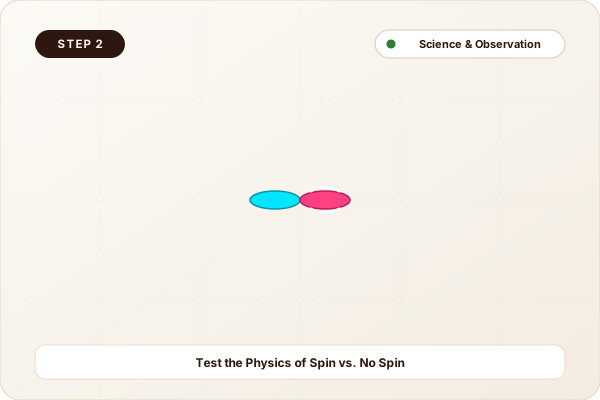
Throw the disc with a hard push but zero wrist spin: watch it flutter and crash. Now snap the wrist violently on release: watch it glide flat and true!
Design a 5-Hole Backyard Disc Golf Course
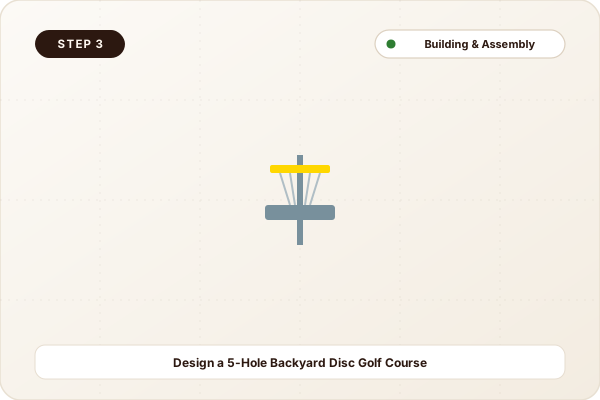
Set up 5 targets around the yard: Hole 1 = large oak trunk, Hole 2 = yellow bucket on patio table, Hole 3 = laundry hamper under the swing set, Hole 4 = bird bath perimeter, Hole 5 = patio chair.
Mark Tee Pads and Establish Pars
Place orange cones for tee-off spots. Label each hole Par 3 (should reach the basket in 3 throws). Let children throw in turn, always playing from where the disc landed.
Play "Frisbee Can Jam" or Distance Showdowns
Place two open trash cans or pop-up hampers 30 feet apart. Teams of two throw toward the hamper while the partner slaps or redirects glancing discs into the basket!
Use soft rubber or foam discs for young beginners to prevent stinging fingers during catches. Never throw toward streets or pedestrians.
Fostering Autonomy & Calculated Risk
Disc golf is the fastest-growing outdoor family sport worldwide. Designing your own backyard course teaches spatial mapping, physics, and relaxed outdoor exercise.