
How to Create a Mechanical Paper Cam & Automaton
Convert Hand-Cranked Rotation into Bouncing Linear Motion
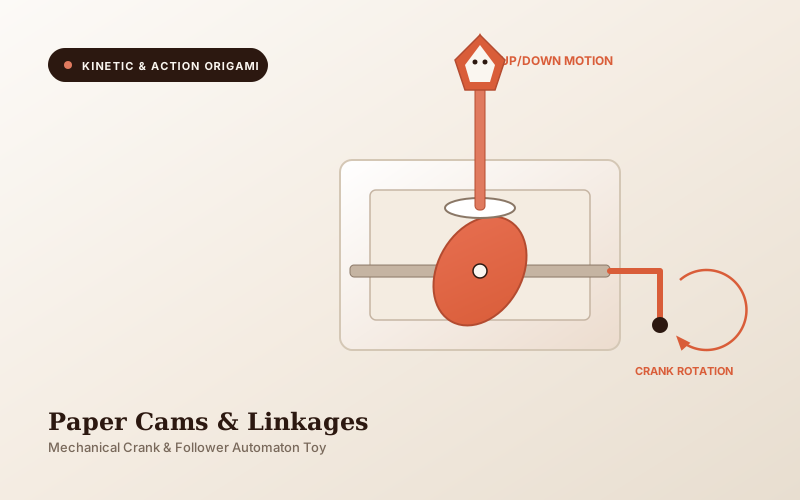
What You Need Before Starting
Folding Instructions (5 Steps)
Follow each step in order. Press your folds firmly against the table using your thumbnail or a ruler for maximum performance.
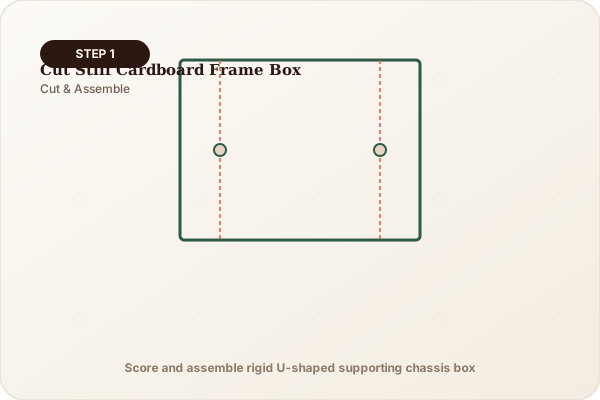
Build the Sturdy Chassis Box
Cut and fold a 4-sided rectangular cardboard open frame (roughly 4 inches wide, 5 inches tall, 2 inches deep) to house the moving mechanism.
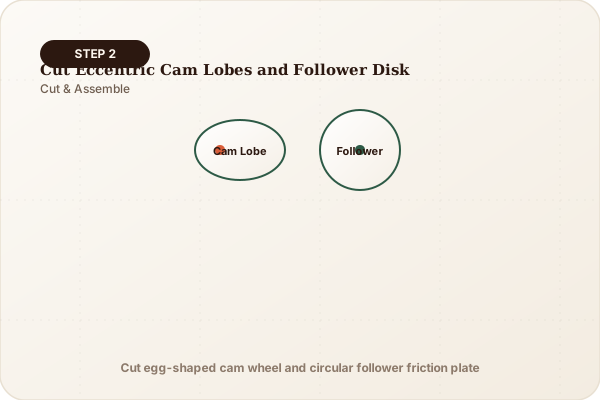
Cut the Egg-Shaped Paper Cam
Cut 3 layers of cardboard into identical 2-inch egg-shaped cams. Glue them together for thickness. Punch an off-center hole through the lower third of the cam.
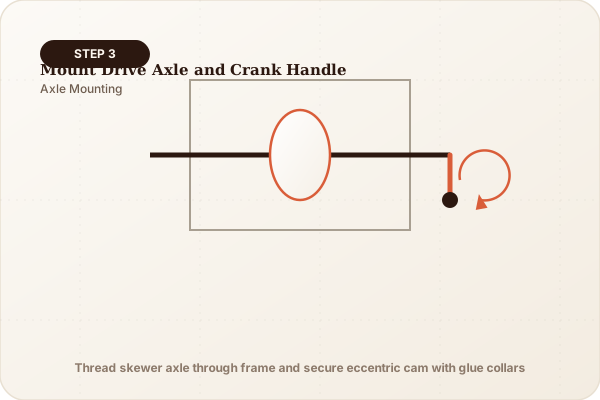
Install Crank Axle Shaft
Thread a skewer or paper straw axle horizontally through the chassis walls, gluing the cam firmly to the center of the axle. Bend the outer end into a hand crank handle.
Assemble Follower Disc & Vertical Pushrod
Cut a 1.5-inch circular disc (the follower) and glue it to the bottom of a vertical skewer pushrod. Pass the pushrod through a guide hole in the top roof of the box so it rests on the cam.
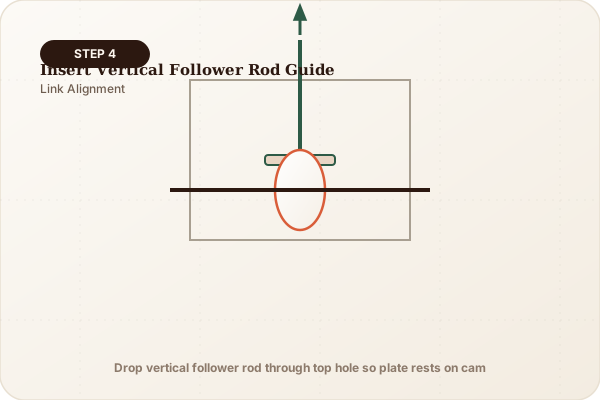
Mount Animated Character on Top
Attach an origami jumping frog, flying bird, or rocket ship to the top tip of the pushrod. Turn the crank handle to watch your figure jump and dance in rhythm!
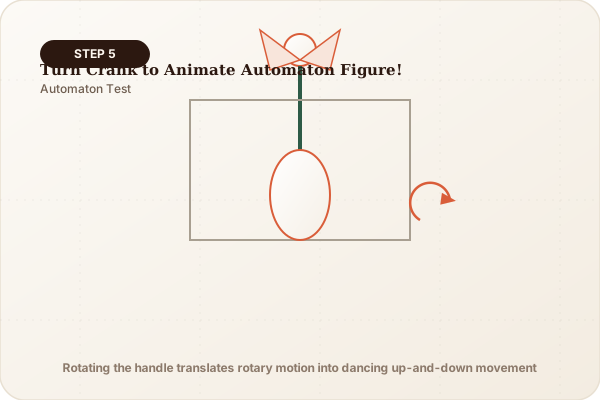
Kinematic Mechanisms: Rotary to Linear Motion Conversion
A cam is an asymmetrical rotating disc. As the hand crank turns the axle at uniform circular speed, the varying radius of the eccentric cam continuously pushes the flat follower disc upward, then lets gravity pull it down. This converts continuous rotary motion into oscillating reciprocating linear motion.
Changing the shape of the cam (pear-shaped, snail-shaped, or oval) creates completely different animation profiles (quick drops, gentle pauses, or rapid hops).
Skills Your Child Develops with This Craft
Applied Mechanical Engineering Concepts
Building real working machines introduces gears, axles, friction surfaces, and mechanical linkages.
Precision Axle Hole Alignment
Punching straight, level axle holes so shafts turn smoothly without binding or wobbling.
Creative Kinetic Prototyping
Designing custom jumping characters (swimming dolphin, flying astronaut, or hopping bunny) on top of the pushrod.
Fun Family Mini-Games to Play
Dual-Cam Synchronized Automaton
Add a second cam on the same axle to make two characters dance together in alternating choreography.
Cam Profile Experimentation
Replace the smooth egg cam with a snail-drop cam. Observe how the character climbs slowly then drops suddenly with a tap!
Parent Note:
Automata are the foundational historical roots of modern robotics and mechanical clocks. Building one from paper creates an unforgettable spark for future engineers.
More Projects in Kinetic & Action Origami & Beyond
How to Create an Origami Jumping Frog
Fold a lively paper frog with an accordion spring-fold at its rear legs that really leaps into the air when you press and flick its back.
How to Create a Traditional Origami Flapping Bird
Fold the iconic Japanese action origami flapping bird whose wings flutter and flap realistically whenever you hold the chest and gently pull its tail.
How to Create a Talking Snap Dragon Puppet
Fold an expressive paper snap dragon puppet with opening and snapping jaws that bites, chomps, and speaks when operated with your thumb and fingers.