Geometry & Measurement Outdoor Math: Stick Rulers & Area Shapes
Measure tree circumferences, calculate lawn perimeters, and identify natural geometric polygons outdoors.
Natural Fractals, Circumference & Geometric Ratios
Scientific Insight
Math is the fundamental operating language of nature: tree circumferences relate to diameter by Pi (π ≈ 3.14159), and branching patterns follow self-similar fractal geometry.
Ecological Value
Estimating the age of heritage trees through trunk girth without cutting timber.
Developmental Skills & Physical Milestones
Circumference & Diameter Measurement
Wrapping flexible measuring tape around tree trunks to calculate trunk diameter using Pi.
Perimeter vs. Area Calculation
Measuring the perimeter fence and calculating square footage area of garden beds.
Geometric Shape Identification in Nature
Identifying hexagons in beehives, spirals in pinecones, and bilateral symmetry in leaves.
Gather materials from nature, your recycling bin, or household kitchen supplies before heading outdoors.
- Tape measure or flexible seamstress tape (50–100 inches)
- Wooden meter/yard stick or standard ruler
- Chalk and string line
- Angle protractor (optional)
- Outdoor math clipboard & calculation sheets
Step-by-Step Play Blueprint
Follow these 5 guided steps. Let your child take the lead in modifying and experimenting with the rules as play unfolds.
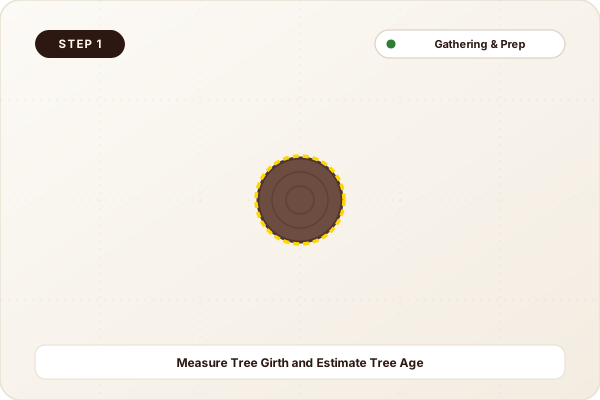
Measure Tree Girth and Estimate Tree Age
Wrap a flexible tape measure around a large tree trunk at 4.5 feet off the ground (Breast Height). Measure circumference in inches.
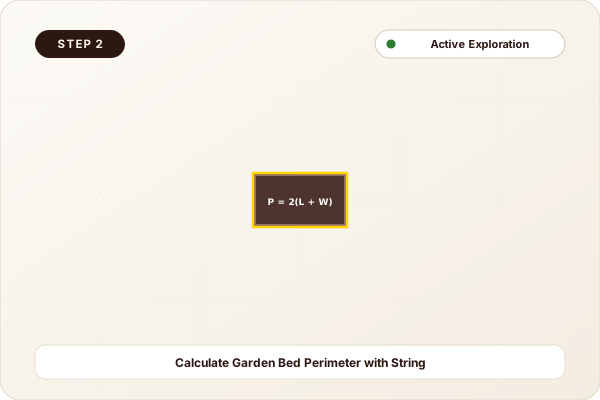
Calculate Garden Bed Perimeter with String
Run a string around the entire outer perimeter of your garden raised bed. Cut string, lay out straight on the lawn, and measure with a yardstick.
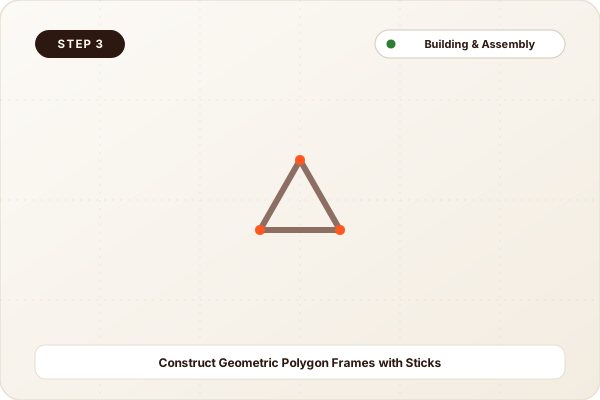
Construct Geometric Polygon Frames with Sticks
Collect straight sticks of equal length. Tie ends together with twine to build equilateral triangles, squares, pentagons, and hexagons on the grass.
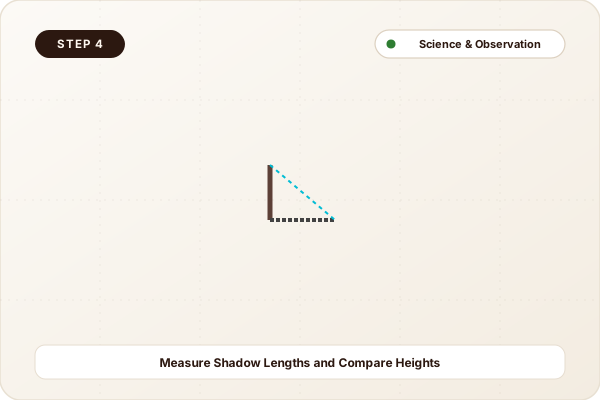
Measure Shadow Lengths and Compare Heights
Measure your child’s height and shadow length. Measure the shadow of a garden shed at the exact same moment: use equivalent ratios to calculate the shed’s true height!
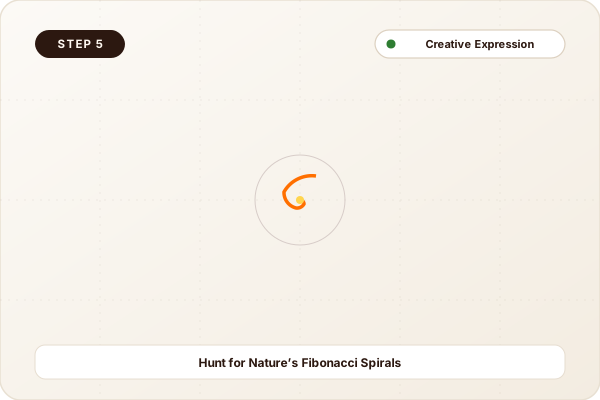
Hunt for Nature’s Fibonacci Spirals
Examine the base of a pinecone or sunflower head. Count the spirals curving clockwise, then count those curving counter-clockwise: notice they match Fibonacci numbers (5, 8, 13, 21)!
Ensure children measure safely around tree trunks, watching out for poison ivy or thorny brambles.
Fostering Autonomy & Calculated Risk
Applied outdoor math transforms arithmetic from abstract memorization into an empowering real-world tool for surveying, building, and understanding nature.
More Outdoor & Garden Activities
View All 65
Tactile Outdoor Sensory Play: Scent Potions & Texture Paths

Forest Flora & Pebble Nature Sorting: Taxonomy Trays