Natural Engineering & Arch Building: Stone Cairns & Log Bridges
Engineer self-supporting keystone stone arches, counterbalanced log bridges, and daub mud huts.
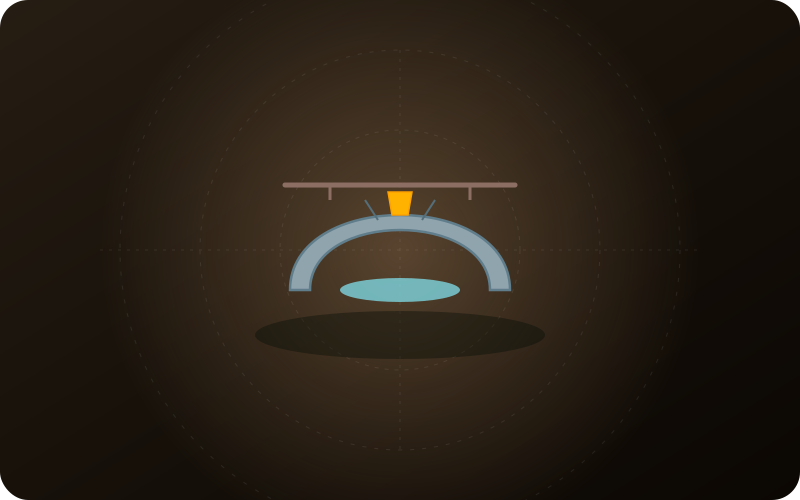
Compressive Keystone Arches & Center of Mass
Scientific Insight
Stone arches require zero glue or cement because downward gravity pushes stones outward into neighboring voussoirs, locking the center keystone firmly in pure compression.
Ecological Value
Building temporary natural structures that leave zero environmental footprint when disassembled.
Developmental Skills & Physical Milestones
Center of Gravity Tactile Calibration
Feeling microscopic contact friction points when balancing irregular stones atop one another without tipping.
Keystone Arch Engineering Logic
Understanding how the wedge-shaped central keystone locks all downward forces into lateral compression.
Load-Bearing Bridge Testing
Testing maximum toy car cargo weight on a stick bridge before structural deflection or failure.
Gather materials from nature, your recycling bin, or household kitchen supplies before heading outdoors.
- Assorted flat river stones, slate flagstone pieces & chunky cobbles
- Sturdy sticks, fallen branch poles & bamboo canes
- Natural clay mud or sand-mortar mixture
- Cardboard arch former template (for keystone arch assembly)
- Small toy cars or weights to test bridge load capacity
Step-by-Step Play Blueprint
Follow these 5 guided steps. Let your child take the lead in modifying and experimenting with the rules as play unfolds.
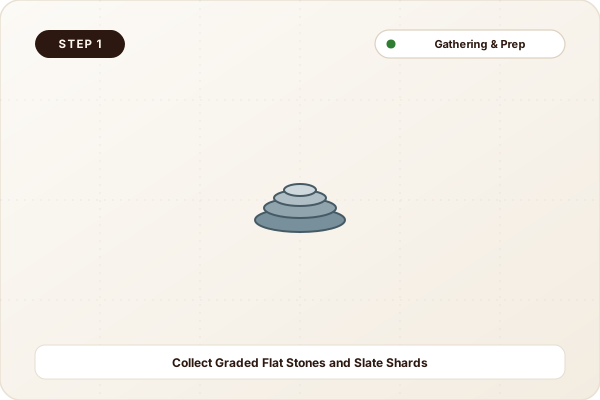
Collect Graded Flat Stones and Slate Shards
Gather flat, textured stones of varied sizes: large broad stones for foundation footings, and progressively smaller flat stones for stacking.
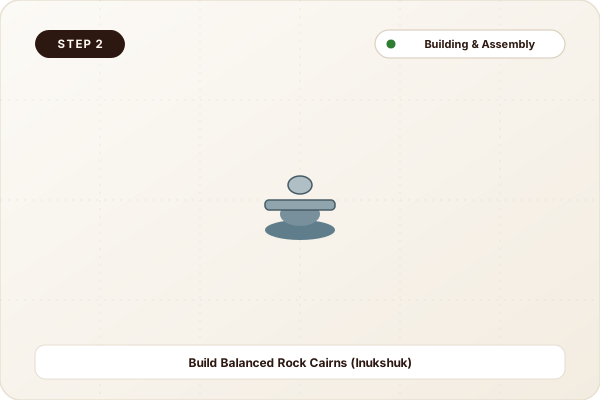
Build Balanced Rock Cairns (Inukshuk)
Stack 5 to 7 stones vertically, finding the exact center of gravity for each rock before releasing your hands. Adjust each stone with millimeter precision until it rests in equilibrium.
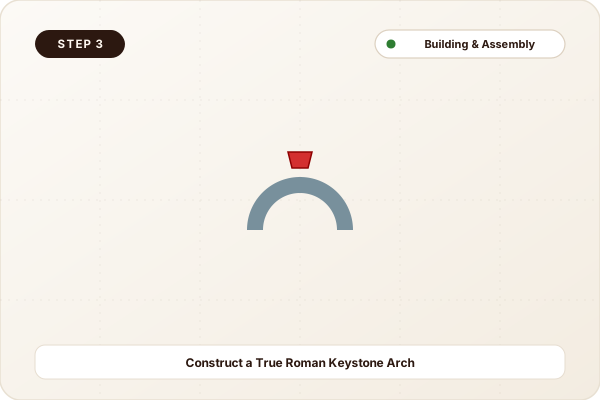
Construct a True Roman Keystone Arch
Place a curved cardboard arch former on the ground. Stack wedge-shaped stones up both sides toward the center. Drop the central wedge "keystone" into the top slot. Remove the cardboard: the arch stands completely unsupported!
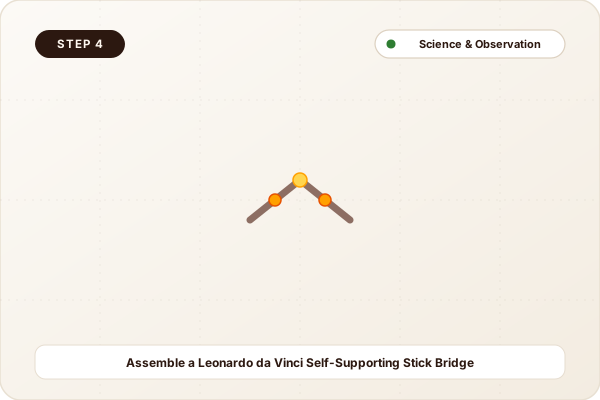
Assemble a Leonardo da Vinci Self-Supporting Stick Bridge
Interlock 8 smooth sticks in a woven reciprocal frame without nails, rope, or glue: when weight is applied to the top, friction locks the sticks together!
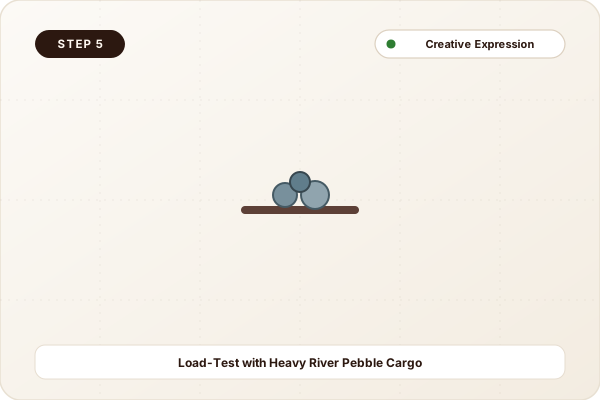
Load-Test with Heavy River Pebble Cargo
Place toy trucks or river stones on the center of your bridge or arch until it reaches maximum load capacity. Document the failure point and redesign for greater strength!
Keep stone structures low (under 18 inches) so falling stones do not bruise toes. Wear sturdy shoes.
Fostering Autonomy & Calculated Risk
Natural building teaches intuitive physics that textbooks cannot convey. The profound thrill when a child pulls away the support and watches their stone arch stand unsupported is unforgettable.
More Outdoor & Garden Activities
View All 65
Clue-Based Backyard Treasure Hunts: Cryptic Riddles & Caches
Hand-Drawn Pirate Treasure Maps: Tea-Stained Cartography