
Early Math Through Play: Counting, Patterns and Shapes at Home
Number sense is built with spoons, stairs and snack bowls, not worksheets.
Children who play with quantity, pattern and shape build the foundation for school maths. Here are everyday games, from counting stairs to sorting laundry, that need no special equipment.
- Counting aloud is not the same as understanding quantity. Let children touch and move each object.
- Patterns, sorting and comparing are core early maths skills that precede arithmetic.
- Short, playful moments inside daily routines beat long drill sessions.
Notice & Name Quantity
Use words like more, fewer, all gone, one extra while eating, dressing and tidying.
Count Real Objects
Touch and move each item as you count. One-to-one correspondence comes before reciting numbers.
Find Patterns
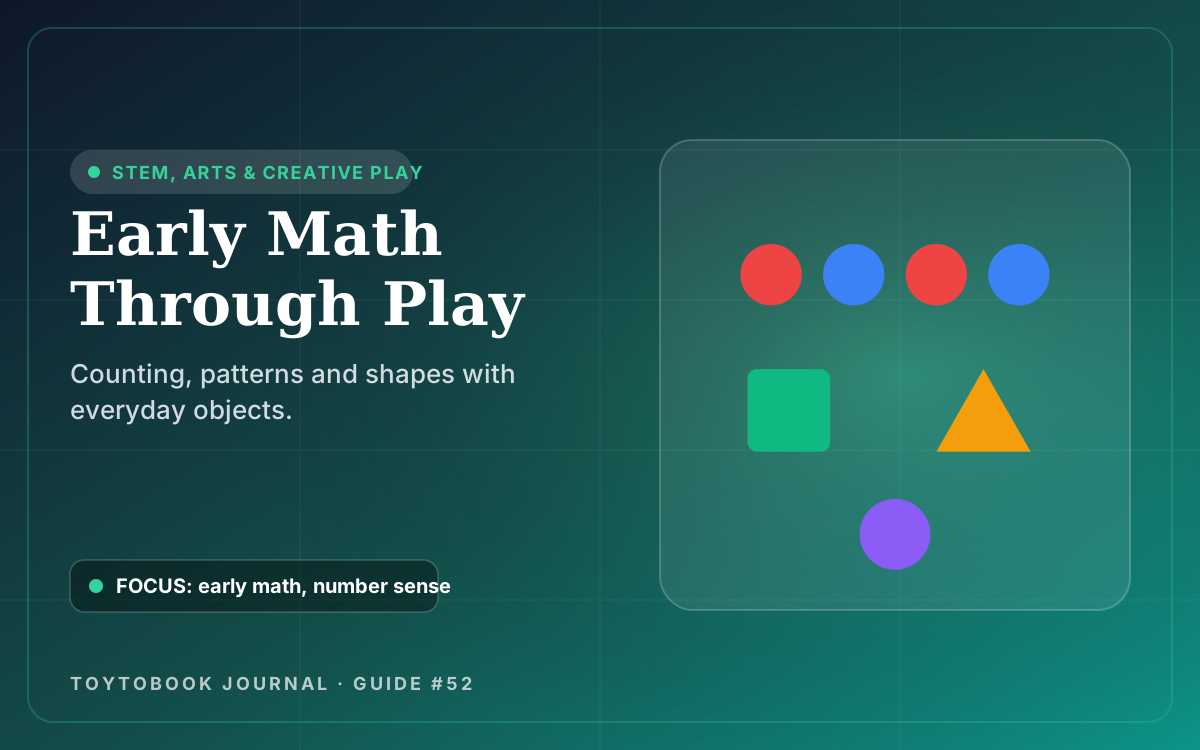
Make red-blue-red-blue chains with beads, pegs or stones, then ask what comes next.
Build with Shapes
Combine blocks and tiles into bigger shapes. Two triangles make a square, so talk about it.
1. Number Sense Comes Before Sums
Number sense is the feeling for how big a quantity is and how amounts relate. A child who can see that five biscuits is more than three, and that three plus two makes five, is ready for formal maths in a way a child reciting 1 to 100 is not.
2. Eight Zero-Cost Maths Games
Count stairs as you climb. Lay the table and ask how many plates we need. Sort socks into pairs. Share ten raisins between two bowls and talk about fair. Make pattern necklaces from pasta tubes. Compare heights with a ribbon. Play shop with real coins. Cook with measuring cups and watch two halves make a whole.
3. Toys That Quietly Teach Maths
Wooden blocks teach fractions and geometry. Nesting cups teach size order. Magnetic tiles teach shape composition. Dominoes and dice teach subitising, which is recognising small quantities at a glance. Choose open-ended sets over electronic quiz gadgets.
4. Language Tips That Help
Use maths words naturally: bigger, heavier, half, next, before, pattern. Ask "How do you know?" rather than just "What is the answer?". Praise the thinking, and treat mistakes as interesting rather than wrong.
Explore Mindful Toys & Paired Literature
Put theory into practice: discover our age-wise catalog of Montessori materials, open-ended blocks, STEM crafts, and matched children’s literature:
Related Research & Play Science Guides
STEM Toys vs Educational Toys: What Do These Labels Actually Mean?
Every toy company brands their products as "STEM" or "Brain Building." Discover what genuine Science, Technology, Engineering, and Math play looks like in the real world.
Are Flashcards Good for Toddlers? What Parents Should Know
Flashcards promise to teach 1-year-olds 500 sight words and world flags. Cognitive psychologists explain why rote 2D memorization fails to build deep conceptual comprehension.
Busy Boards for Toddlers: Helpful Learning Tool or Just Another Toy?
Busy boards are everywhere on social media. Discover when sensory latch boards support fine motor pincer strength and when real-world household practical life is even better.